


Computer System Validation UK
What Is Computer System Validation?
In regulated industries, any software or hardware that affects product quality, patient safety or data integrity must be validated. Once the system is configured and ready for qualification, we execute a three-stage qualification programme. In essence, computer system validation (CSV) is a structured programme of evidence gathering that confirms a system performs exactly as intended.
CSV actively ensures data integrity and traceability across all regulated processes. It provides documented compliance evidence for the FDA (CFR21 Part 11) and EU GMP Annex 11. Both are mandatory standards for UK pharmaceutical businesses.
In practice, for UK pharmaceutical and life science businesses, CSV is a regulatory obligation rather than a quality option. Specifically, MHRA, the FDA and the European Medicines Agency all require documented evidence..
We provide end-to-end CSV validation services aligned to GAMP 5, FDA 21 CFR Part 11 and EU GMP Annex 11. These three frameworks govern computerised software use across UK and international regulated industries.
Computer System Validation Services UK
Notably, our specialist team works alongside your project and quality teams. Together, we plan, execute and document every stage of the process. In each case, we scope each engagement to your specific regulatory obligations system complexity and operational risk profile.
Risk Assessments & CSV Planning
Before work begins, we conduct a risk assessment to determine the appropriate level of effort. Under a GAMP 5 risk-based approach, not every platform requires the same depth of assessment. Consequently, we focus effort where patient safety and data integrity risks are highest. In summary, a tailored Validation Plan sets out scope, responsibilities and timelines before work commences.
SOP Development for CSV
Equally, ongoing compliance depends on well-written procedures. We draft and review all SOPs required to manage a validated system. These cover user access, change control, audit trail review, backup and recovery, and periodic revalidation. Our SOPs are written to satisfy MHRA inspection criteria and align with EU GMP Annex 11 expectations.
Software Vendor Audits
Regulated businesses are responsible for their suppliers' quality processes, not just their own. Additionally, we conduct Software Vendor Audits prior to deployment — assessing development methodology, quality management processes and regulatory compliance posture. Moreover, we deliver a written audit report as part of your quality documentation package.
Data Migration & Integrity Testing
Importantly, all data transferred into a compliant system must meet integrity requirements before acceptance. In particular, we test each record for accuracy and completeness before go-live. Our team manages the full data migration process. We verify that records arrive intact, traceable and consistent with source data, in line with regulatory data integrity guidelines.
GAMP 5 and Regulatory Compliance
Computer Software Assurance (CSA)
FDA guidance on Computer Software Assurance (CSA) has shifted the emphasis in regulated software assurance. Traditional compliance approaches generate the same documentation depth for every platform. However, CSA takes a different view. Instead, testing effort and documentation should match the actual risk a platform poses to patients and data integrity. We apply this risk-based thinking across every CSV engagement.
GAMP 5 Risk Categories Explained
GAMP 5 risk categories determine the depth of testing activity required. Your programme satisfies both EU GMP Annex 11 and current FDA CSA expectations. As a result, low-risk platforms are not over-tested. In contrast, critical ones receive the depth of evidence they require.
Key Regulatory Frameworks
Three regulatory frameworks govern computerised systems across UK life science and pharmaceutical businesses:
FDA 21 CFR Part 11 governs electronic records and signatures in US-regulated operations. It applies to any UK business supplying the US market or operating within a global group.
EU GMP Annex 11 covers computerised systems used in EU-licensed pharmaceutical manufacturing — a mandatory standard for MHRA-licensed operations following the UK’s adoption of equivalent guidance post-Brexit.
GAMP 5 provides the industry-accepted risk-based framework for planning and executing system testing. Rather than applying a one-size-fits-all approach, GAMP 5 categorises software by complexity and directs testing effort proportionally.
Our Multi-Framework Approach
We design every testing programme to satisfy whichever combination of these frameworks applies to your business. There is no unnecessary duplication of effort or documentation.
CSV Validation Process
Overall, a robust CSV process follows a defined lifecycle from initial requirements through to final sign-off. We manage each stage systematically, producing documented evidence at every step.

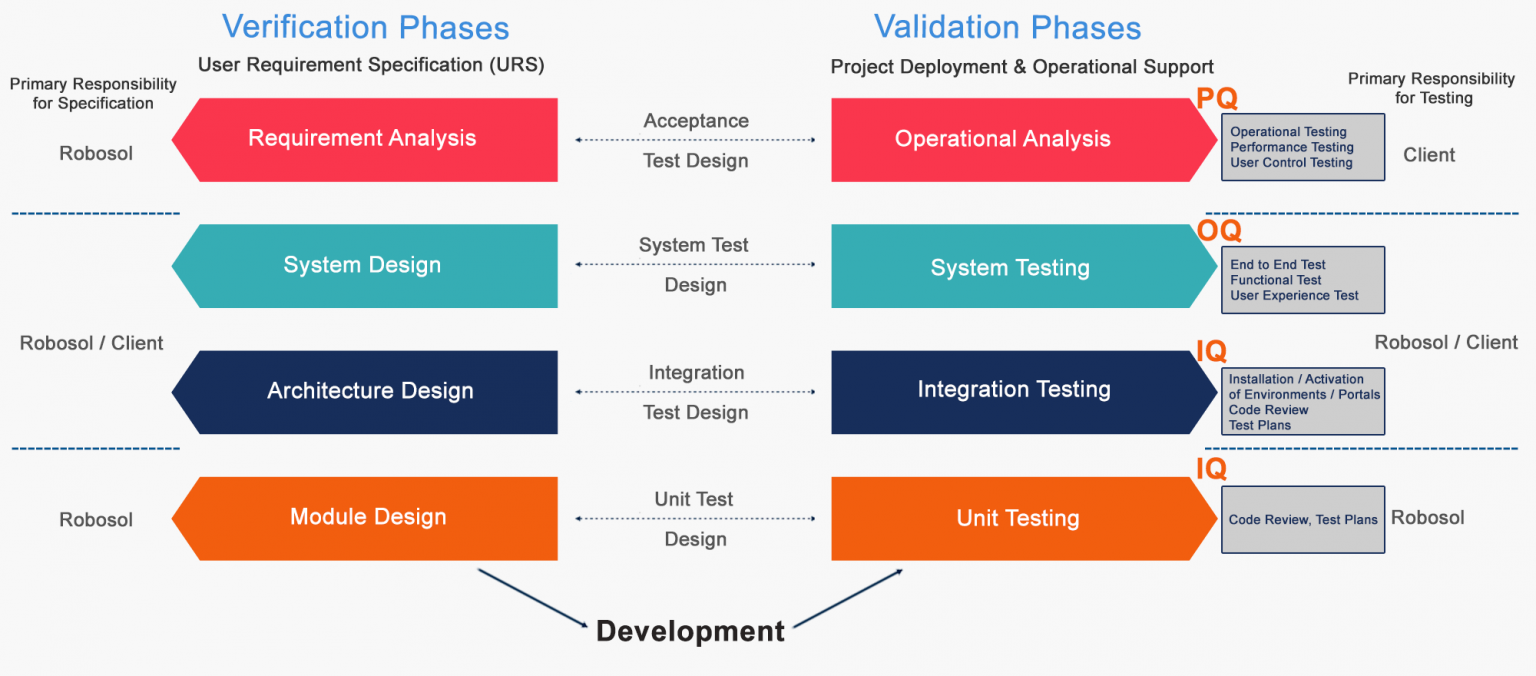
The CSV lifecycle covers: defining user requirements, creating a functional project plan, producing functional specifications, developing testing protocols, performing a gap analysis, executing test scripts, producing a testing report and completing the Validation Summary Report. Each stage generates documentation that forms part of your permanent compliance file.
Validation Process Flow
Get Our Free Validation Brochure
System Verification Stages — IQ OQ PQ
IQ OQ PQ Qualification Stages
Once configured, we execute a three-stage qualification programme. In particular, this covers Installation, Operational and Performance qualification.

First, IQ confirms the system has been installed exactly as specified in the Functional Design Document. This covers: Tenant Qualification, Environment Setup, Disaster Recovery and Security Controls, Authentication and User Permissions, and Software Access across desktop and mobile devices.
- Tenant Qualification
- Environment Setups
- Disaster Recovery and Security
- Authentication and User Permissions
- Software Access on Desktop
- Mobile devices

Next, OQ verifies that every configured function performs correctly under standard operating conditions. Our OQ protocol covers: workspace personalisation, filter and display settings, record sorting, page and report search, data export, Event Log and Audit Trail Verification, and Security Preference confirmation.
- Customising Dynamics BUSINESS CENTRAL
- Personalising the Workspace
- Set Filter
- Displaying lists
- Sort Records
- Search for page or report
- Export Data
- Event Log & Audit Trail Verification
- Security Preference Verification

Finally, PQ confirms that the platform performs consistently under real-world operational load. This qualification includes end-to-end process execution, dependency checks, credential verification and Business Central performance under production-equivalent data volumes. Finally, a signed PQ report closes out the formal qualification programme.
- Test Script Execution and Dependency Summary
- Test Script Reference Material (usernames, passwords, product information etc.)
- Business Central Credentials
Which Systems Need Computer System Validation?
Any system that affects product quality, patient safety or the integrity of regulated data falls within the scope of regulatory requirements. In UK pharmaceutical and life science environments, this typically includes:
- Microsoft Dynamics 365 Business Central (ERP)
- Laboratory Information Management Systems (LIMS)
- Document and Quality Management Systems (DMS / QMS)
- Warehouse Management Systems (WMS)
- Manufacturing Execution Systems (MES)
- Electronic Batch Record systems
We specialise in CSV for Microsoft Dynamics 365 Business Central, combining full ERP implementation capability with in-house CSV expertise — your system is built and tested by a single accountable team.
Why UK Businesses Choose Us
A UK pharmaceutical manufacturer recently completed full IQ OQ PQ qualification for Microsoft Dynamics 365 Business Central in under ten weeks — delivered on time and inspection ready.
As a Microsoft Gold Partner with over fifteen years of experience in UK regulated industries, we offer a combination of deep Dynamics 365 knowledge and in-house expertise rarely found in a single supplier.
Furthermore, our consultants have supported organisations through MHRA inspections and EU Annex 11 assessments. Above all, we produce regulatory documentation that stands up to scrutiny — not just ticks a box.
Equally, speed matters. Additionally, with a large pool of specialist resources across the UK, we mobilise quickly. Whether project timelines are tight or an inspection date is confirmed, we are ready.
Every ERP implementation involves configuration decisions that must be tested and documented. As a result, our governance process provides the structure to ensure deployment is controlled and meets all applicable regulatory requirements.
Additionally, we are a certified ERP service provider. As a result, we deliver quality-assured software solutions that satisfy MHRA, FDA and EU GMP compliance standards across every engagement.
- Our pre-built Dynamics 365 template reduces IQ OQ PQ delivery time by up to 40%.
- We have delivered CSV projects across UK pharmaceutical businesses for over 15 years.
- Every CSV project we deliver includes full MHRA-ready documentation from day one.
Validation Services: New, Cloud and Legacy Systems
How We Handle Each Validation Scenario
When Is Computer System Validation Required?
MHRA and FDA guidance identifies several trigger events that require documented compliance evidence. For example, a new system implementation is the most obvious trigger. Specifically, any computerised system introduced into a regulated environment requires confirmation and testing before production use. Similarly, a major software upgrade can also require reassessment. In addition, if new functionality affects product quality or data integrity, we assess and test the change. Furthermore, configuration changes are another trigger. Modifying a workflow or user access controls can also trigger regression testing. Ultimately, we manage change control throughout the compliance lifecycle — not just at initial go-live.
Validating Cloud and SaaS Systems for UK Pharma
Cloud-hosted and SaaS platforms present a different challenge — the software vendor manages infrastructure updates on a continuous release cycle. Therefore, our approach separates supplier and customer responsibility clearly. Where the vendor meets GAMP 5 Category 4 criteria, the scope on the customer side is reduced accordingly. Consequently, your documentation focuses on configuration, interfaces and user acceptance — not the underlying code. Notably, we have developed a pre-built Dynamics 365 template, accelerating IQ OQ PQ delivery with all MHRA and FDA standards met from day one.
Retrospective Computer System Validation
Many UK pharmaceutical businesses operate legacy systems implemented before formal compliance requirements applied. Fortunately, retrospective qualification addresses this directly. As a result, we conduct a gap analysis against current MHRA and EU GMP Annex 11 requirements, identifying missing evidence and rebuilding the evidence package. Where records are incomplete, we reconstruct or justify them with your team. Subsequently, a risk assessment determines which gaps pose the greatest regulatory exposure, with high-risk items addressed first. Importantly, MHRA inspectors accept retrospective qualification where the assessment is thorough and you fully document remediation.